Term Insurance Made Clear- No Guessing
Get Guidance & Buy From Experts
Insurance gets complex. That’s why you need an expert who can steer you through product choices, buying decisions, and claim support.
Choosing the best term insurance plan in India is important to get long-term financial protection for your loved ones. As the medical costs are increasing, financial responsibilities are growing day by day, and lifestyle risks are rising, the top term insurance plan helps protect your family against life’s difficult situations.
Term insurance curated for every specific need
Term Insurance For NRI
Spouse Term Insurance
Top Term Insurance Comlpanies in india
LIC Term Insurance Plans
Group Term Life Insurance
50 Lakh Term Insurance
Term Insurance For Housewife
Term Insurance For Housewife
2 Crore Term Insurance Plan
1 Crore Term Insurance Plan
Zero Cost Term Insurance
Term Insurance With Return Of Premium
Your Super-Simple Guide to Term Insurance. Download Now!
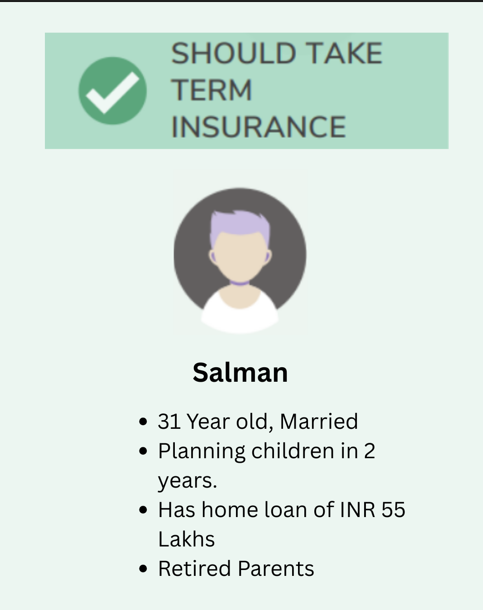
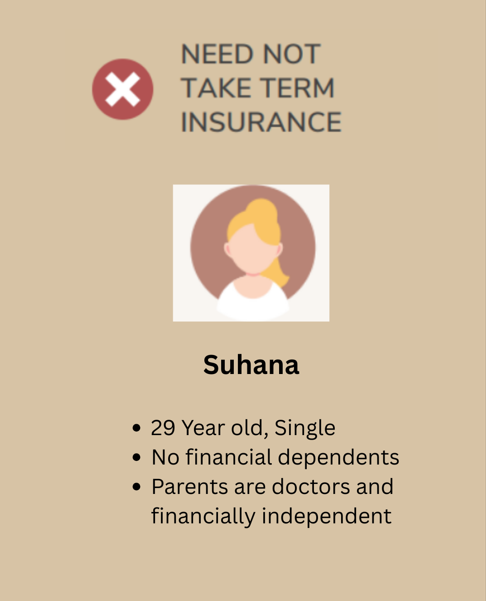
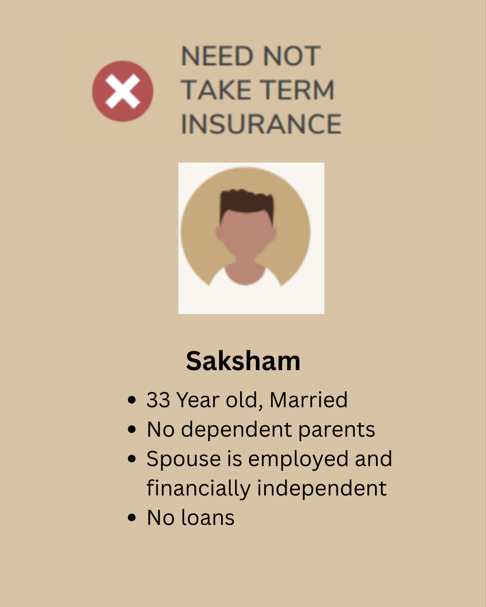
- Do you actually need a term insurance plan?
- Is buying coverage till age 99 really worth it?
- Does a high claim settlement ratio truly ensure your claim gets approved?

Top Insurance Companies
HDFC Life Insurance Co. Ltd
ICICI Prudential Life Insurance Co. Ltd
Max Life Insurance Co. Ltd.
TATA AIA Life Insurance Co. Ltd.
Life Insurance Corporation of India

Aditya Birla Sun Life Insurance Co. Ltd.

Canara HSBC OBC Life Insurance Co. Ltd.

Bajaj Life Insurance Co. Ltd.
Frequently Asked Questions
Term insurance offers financial protection to your family by providing a high life cover at a low premium. If the policyholder dies during the policy term, the nominee receives a lump-sum payout, helping them manage expenses, repay loans, and stay financially secure. It’s the simplest and most affordable way to secure your family’s future.
Term insurance offers high coverage at low premiums, making it a strong choice for financial protection. It provides a death benefit to dependents if the policyholder dies during the term, helping cover essentials like loans and education without maturity payouts in basic plans.
Yes, LIC offers multiple term insurance plans that provide pure life cover at affordable premiums , including options like online terms plan, increasing cover plans, and policies with riders for extra protection.
Individuals aged 18-65 years with stable income, good health, and proper documentation typically qualify for term insurance. Insurers asses factors like occupation, medical history, and residency to approve coverage.
Age top the list, with younger buyers securing lowering rates due to reduced mortality risk. Higher sum assured and longer policy terms directly raised premiums proportionally. Health status, smoking habits, gender, occupation and location play key roles- smokers or high risk jobs face steeper costs. Riders or add-ons further increase the amount.
Yes, individuals can purchase multiple term insurance policies from different providers, as IRDAI imposes no limits on the number of plans. Nominees can claim benefits from all active policies upon the policyholder’s death, provided full disclosure of existing coverage during purchase. Disclose all policies to avoid claim all disputes; insurers may adjust coverage if total exceeds income norms. Multiple plans offer diversified protection but increase premium tracking efforts.
Yes, NRI’s holding valid Indian passports, OCIs and PIOs can purchase term insurance in India from various insurers, provided they meet age criteria (typically 18-60/65 years) and health requirements.
Yes, people with pre-existing medical conditions can usually buy term insurance, but approval, premium, and coverage depend on the type and severity of the illness. Insurers may charge higher premiums, impose specific conditions, or in some cases decline the proposal after medical underwriting.
No, term insurance suits those with dependents, stable incomes, and good health within age limits(18-65 years), but excludes homemakers without incomes, high risk occupations, or severe pre-existing conditions. Eligibility varies by insurer based on medical exams and documentations.
Determining the right sum assured for your term insurance policy involves assessing your family’s financial needs, including living expenses, outstanding debts, and future financial goals. It’s essential to consider factors like inflation and potential lifestyle changes that may impact your family’s financial requirements over time.
Term insurance is not an investment products but a pure risk protection that offers high life cover at low premiums and tax benefits making it an efficient way to secure your family’s future. It is generally recommended as foundational safety net, while returned-focused investments should be done through separate investments products.
Term Insurance
Life throws surprises our way, like sudden accidents that can leave families struggling financially- Even if you’re healthy today. Real stories remind us to plan ahead, and term insurance is a simple way to protect your loved ones.
This affordable policy acts as a safety net, paying a lump sump to your family if something unexpected happens to you. It covers essentials like loans, education, daily expenses when you’re no longer around.
But what exactly is term insurance, and why is it an essential component of your financial portfolio? Let’s read on…
What Is Term Insurance?
Term insurance is a simple life insurance policy that gives your family a big payout if you pass away during a set time period like 20 or 30 years.
You pay regular premium for coverage over a chosen “term”. If you die within that term your nominees will get the full sum assured to cover expenses loans or kids education- no payout if you outlive it. It’s pure protection not savings, so premiums stay low often starting at ₹500/month for ₹1 crore cover. You select the coverage amount and term, undergo medical checks if needed and pay premiums to activate to activate the policy. Upon the policy holder’s death within the terms nominee receive the sum assured tax-free, helping cover education, mortgages, or income replacement. If the term end without claim, coverage simply expires without refund, unless it’s return of premium variant. It delivers high coverage at low cost, often. If you die within that term your nominees will get the full sum assured to cover expenses loans or kids education- no payout if you outlive it. It’s pure protection not savings, so premiums stay low often starting at ₹500/month for ₹1 crore cover. You select the coverage amount and term, undergo medical checks if needed and pay premiums to activate to activate the policy. Upon the policy holder’s death within the terms nominee receive the sum assured tax-free, helping cover education, mortgages, or income replacement. If the term end without claim, coverage simply expires without refund, unless it’s return of premium variant. It delivers high coverage at low cost, often ₹1 crore for premiums under ₹1,000 monthly for young buyers, ensuring dependents’ stability. Flexibility in payout options and convertibility to permanent plans add value for long-term planning. For Indian families, it’s a foundational step in financial security amid rising living costs. In essence, term insurance empowers you to craft a customized shield, perfectly fitting your family’s present and future needs. On other hand, in term insurance, if you outlive the policy, you don’t get any benefits. You can complement your understanding by watching our insightful video.
Delve into the detailed analysis and comparative insights offered by Pareshak’s experts, empowering you to make informed decisions customized to your specific requirements
Ready to take the first step?
Different Types Of Term Insurance Policies...
- When seeking term insurance for family protection, various types offer tailored benefits like steady coverage, inflation safeguards, or refunds. Some provide money back upon survival, while others extend to spouses or children. Grasping these categories ensures selecting a plan aligned with your goals and budget.
Term insurance plans can be categorized –
Based On Premium Payment Term:
- Regular Pay Term Insurance
With regular pay term insurance, you pay premiums regularly until the policy ends. The premium payment term i.e the period for which you need to pay the premiums, aligns with the policy duration. It’s the simplest term plan, widely offered by insurance companies.
- Limited Pay Term Insurance
With this plan, you can wrap up paying premiums in a few years, regardless of your chosen policy duration. Meaning, you can complete all your premium payments in a ‘limited’ number of years, irrespective of the policy duration you select.
- Single Pay Term Insurance
With this type, you make a one-time premium payment when you buy the term plan. After that, your family is covered for the entire policy duration without any more payments.
Based On The Level Of Sum Assured
- Level Term Insurance
The sum assured under a level term plan remains constant throughout the policy duration – it will neither increase nor decrease.
- Increasing Term Insurance
In this type, the coverage amount increases over time, reaching a maximum limit set by the insurer. These plans are crafted to tackle inflation and growing financial responsibilities. Choosing this option ensures inflation-proof as well as adequate coverage for your family.
- Decreasing Term Insurance
Unlike increasing term insurance, a decreasing term insurance plan sees the sum assured decreasing every 5 years until it reaches a limit of 50% of the base cover. This type suits those whose financial responsibilities reduce with age. If you anticipate paying off loans soon, this plan is ideal. In the event of your passing during the policy period, the insurer pays the reduced sum assured to settle loans or liabilities for your family.
Other Types
- Whole Life Term Insurance
True to its name, a whole life term insurance plan offers coverage for your entire life, typically up to 99 or 100 years of age. These plans assure a financial legacy for your loved ones as life expectancy is usually lower, making it unlikely for you to outlive the policy term.
- Joint Life Term Insurance
A joint life term insurance plan is a type of term insurance policy where you and your spouse are both covered under a single policy. You, as the primary life assured, and your spouse, as the secondary life assured, can have separate or shared cover amounts-
1– Joint Life Policy With Separate Sum Assured: In this type of policy, you and your spouse have your own individual sum assured (SA). Here the secondary life assured (typically the spouse)’s cover amounts can be -equal to the cover amount of the primary life assured, 50% of the cover amount of the primary life assured, 25% of the cover amount of the primary life assured. If one spouse passes away during the policy term, the cover amount of that spouse is paid out to the surviving spouse as a death benefit. If the surviving spouse also passes away during the policy term, the cover amount is then paid to the nominee of the policy.
2– Joint Life Policy With Shared Sum Assured: On the other hand, joint life policies with shared sum assured entail both spouses being covered under the same sum assured. In this scenario, the death benefit is provided upon the demise of either the primary or the secondary life assured. If the primary life assured passes away, the death benefit is paid out to the surviving spouse and the policy terminates.
Here Are Some More Examples To Give You Little More Clarity...